Tournament Format

Group Stages Tournament

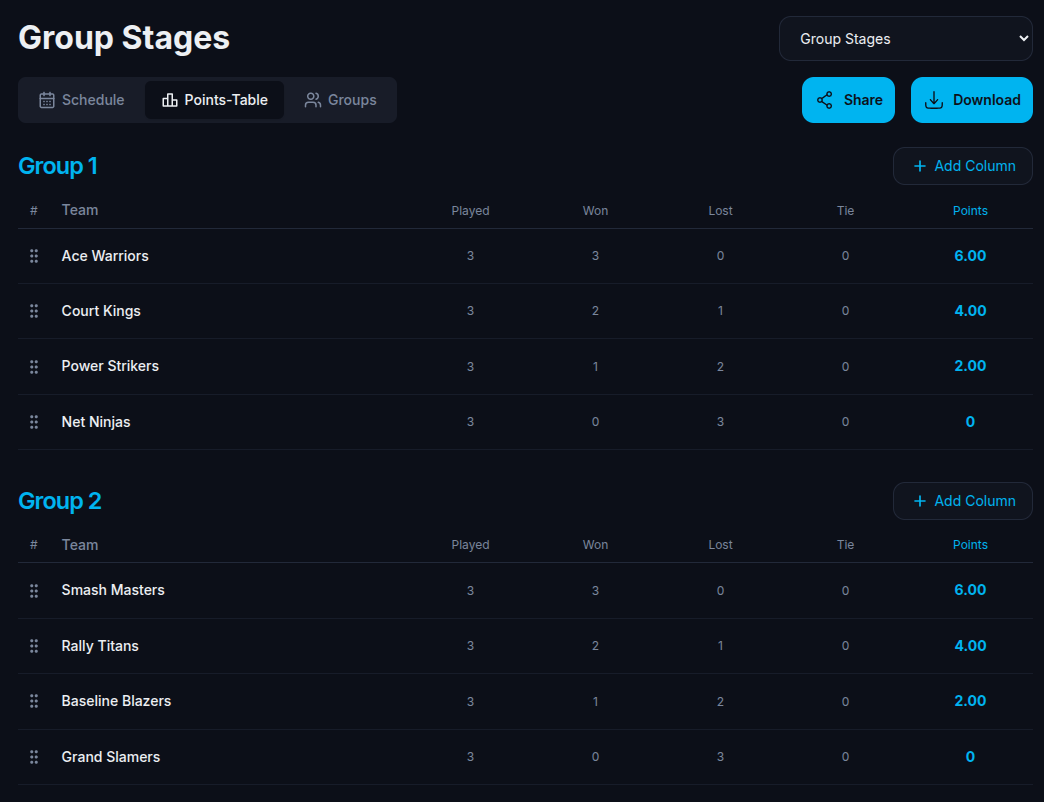
Divide teams into groups and let them compete within their group. The top teams advance to knockout rounds.

How Group stages Works

Every team gets multiple matches, ensuring fairness and giving all participants a chance to perform.

Points system keeps competition exciting — teams must consistently perform to advance.

Works well for larger tournaments where you want to maximize playtime and engagement.

Organizers can structure groups to balance skill levels and create competitive matchups.

Easy to track progress, with standings showing which teams advance.

Reduces the risk of early elimination, making it less harsh than knockout formats.

Promotes strategy, as teams may need to manage energy, substitutions, and game plans across multiple matches.

Can handle uneven numbers of teams by adjusting group sizes.

Step-by-Step Guide

Follow these simple steps to create your tournament.

01
Step 01
Step 01

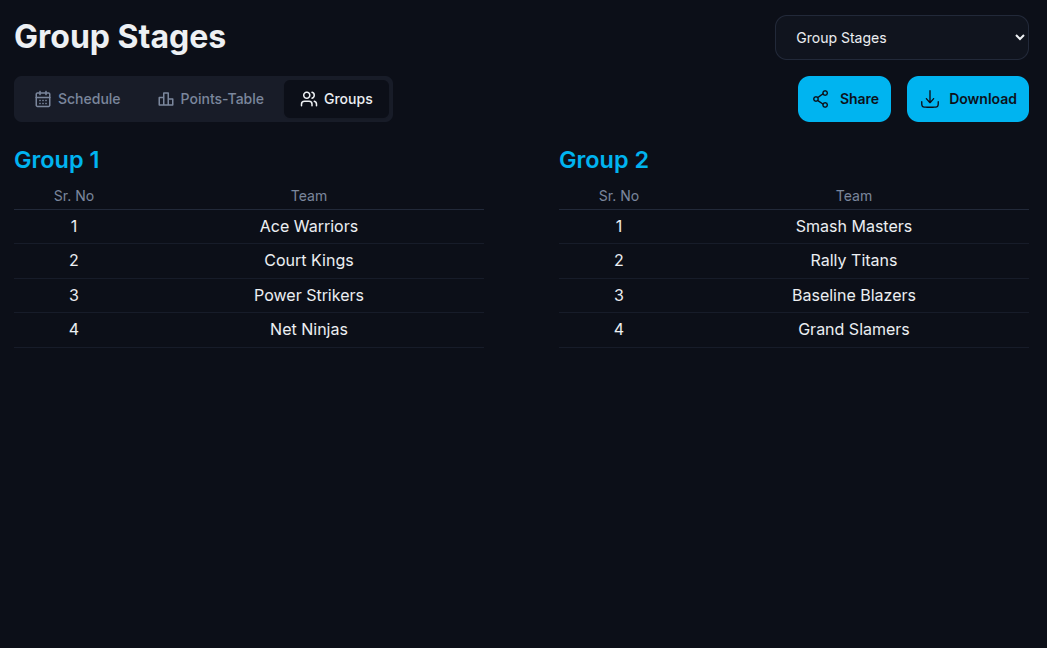
Draw Groups

Teams are divided into groups (pools) through a draw. Each group contains an equal number of teams that will compete against each other.

  • Teams divided into balanced groups
  • Groups labeled A, B, C, D, etc.
  • Seeding ensures competitive balance
02
Step 02

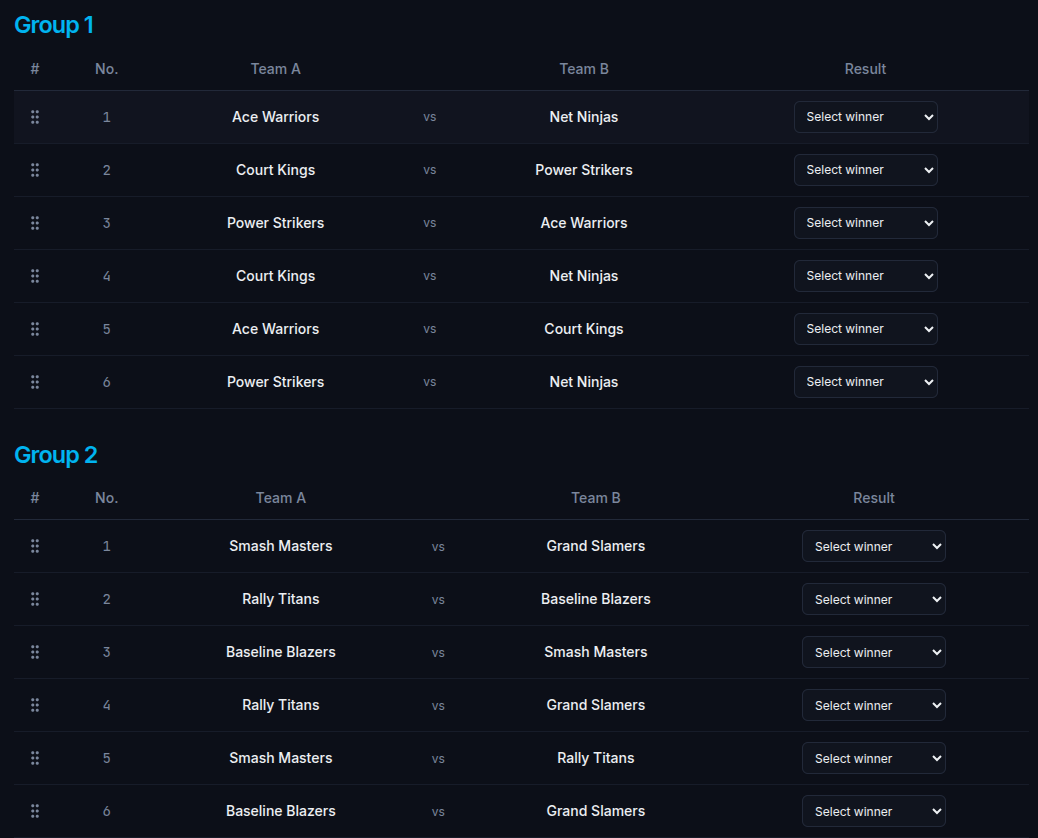
Group Play

Within each group, teams play a mini round-robin format. Every team faces all other teams in their group, earning points for wins and draws.

  • Round robin within each group
  • Points tracked per group
  • Multiple matches per team
Step 02
03
Step 03
Step 03

Crown The Champion

Team with the most points will crown as a winner.

  • Each group has it's own champion.
  • You can pair top teams of each group for final group stage

Explore Other Formats

Frequently Asked Questions

What is a Group Stages Tournament?
Teams are divided into groups and play each other. Top teams from each group move to the knockout rounds. This format allows teams multiple chances to advance.
Why choose Group Stages?
Ideal for larger tournaments where fairness and playtime matter. Teams aren't eliminated after a single loss, which makes the competition more balanced and engaging.
How are matches decided?
Matches within groups are typically round-robin. Teams earn points for wins or draws, and the top teams advance based on their points and goal differences if applicable.
Is this format fair for all players?
Yes. By allowing multiple matches per team, everyone gets a fair chance to show their skills and advance based on consistent performance.

Ready to Create Your Bracket?

Start building your Single Elimination Tournament with Bracket Buddy today.